Have you ever felt those butterflies before a big event? Or have you noticed your stomach drop when you’re anxious? This is not just a figure of speech, it is in fact your gut and brain having a very real conversation with each other! One that shapes far more of your daily life than most people realise.
If you’ve ever wondered why comfort food actually feels comforting, why a stressful week can wreck havoc on your digestion or why some people seem to crave sugar no matter how hard they try to resist – the answer can often trace back to the gut-brain connection. Understanding it doesn’t just satisfy curiosity, it can genuinely change the way you think about food, mood and your body working together.
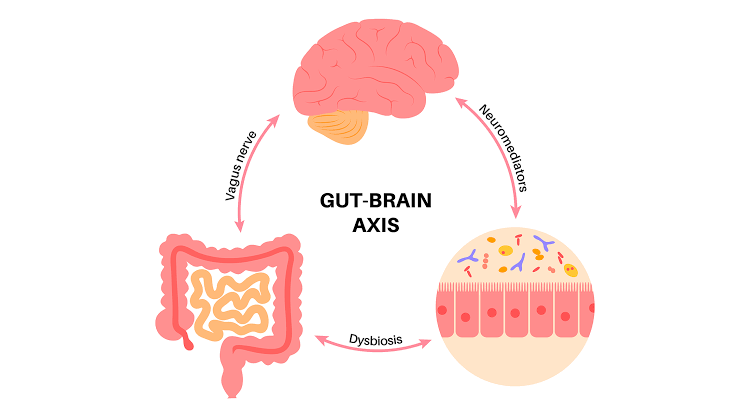
The gut and brain are in a constant two-way conversation with each other. It’s not a one way street where the brain simply controls digestion and the gut just follows orders. The vagus nerve acts as the “phone line” between the gut and brain. It’s the main pathway carrying signals from the organs in your gut up to your central nervous system (CNS). Messages travel back down the same line. Roughly 90-95% of the body’s serotonin (the “feel good” chemical) is actually made in the gut, not in the brain! It plays a role in regulating digestion, but also influences mood, sleep and even how you experience pain. Your gut bacteria and the immune system are in on the conversation too, sending their own unique signals along for the ride! Around 70 percent of your immune system is housed in the gut, which makes this one of the busiest intersections of biology, immunity and mental health in the entire body.
– Digestion and mood affect each other. Stress can make the stomach feel upsettled, and an unsettled stomach can in turn affect mood. The cycle can continue in either direction. This is why anxiety shows up as stomach pain, nausea or a sudden urge to run to the bathroom before something stressful!
– Immune function and inflammation. A large portion of the immune system lives in the gut, and this is one of the key ways the gut and the brain can influence one another. When the gut-lining or microbiome is out of balance, it can contribute to low-grade inflammation that has a knock-on effect throughout the body.
– Sleep quality. Gut health and sleep are closely connected, and poor sleep can disrupt gut function, just as gut discomfort can disrupt sleep. Serotonin is also the building block for melatonin, meaning that gut health and a good night’s sleep are more connected than most people assume.
– Food cravings. The microbes in your gut rely on you eating certain foods to survive, and emerging research suggests they may nudge your food preferences to keep themselves fed. For example, stronger carbohydrate cravings can be shown in people with higher levels of certain bacterial strains. The encouraging part is the relationship works both ways, so the foods you choose can also help reshape those cravings over time.
– Energy and focus. Brain fog and sluggishness after certain meals can be common. Since so much of the gut-brain signalling relies on what you eat, the food choices you make throughout the day can genuinely affect how clear-headed and energised you feel!
While there is strong evidence to support the biological pathways between the gut and brain, science is still developing when it comes to knowing exactly how much change to the gut can shift mood or mental health day to day.
– Fibre variety. Variety matters more than quantity alone, since different bacteria thrive on different types of fibre. A more diverse microbiome is generally more resilient at fighting off illness or a stretch of poor eating. Soluble fibres (oats, legumes, apples) and resistant starch (cooled potatoes, green bananas, legumes) are good at feeding the bacteria that help produce the compounds needed for healthy gut-brain signalling.
– Aim for plant diversity. It has been noted that those eating more than 30 different plant foods a week had a noticeably more diverse gut microbiome than those eating 10 or fewer. Think of this as encouragement to rotate the vegetables and fruits on your plate.
– Fermented foods. Adding foods such as yoghurt, kefir and kimchi are easy additions that support a diverse gut microbiome and potentially support the gut lining integrity. Small amounts can make a difference over time.
– Regular meals. Consistent eating patterns help keep digestion and this communication system running smoothly as well as regulating hunger and satiety hormones. Skipping meals or going long stretches without eating can disrupt this rhythm.
– Movement. Regular physical activity has been shown to support a healthier, more diverse gut microbiome, along with supporting mood and energy levels and healthy gut motility.
– Managing stress. Since stress and the gut function are so closely linked, things like sleep, movement and downtime all play a supporting role. Even simple practices such as slow, deep breathing before a meal can help shift the body out of “stress mode” and into a more regulated state for digestion.
– Limiting ultra processed foods. These foods tend to be lower in fibre and nutrients that the gut bacteria thrive on. Keeping them as an exception rather than the everyday choice supports the whole system.
Small and consistent changes tend to make the biggest difference here rather than any single food or supplement. Personalised dietitian support can help you figure out what actually works for your body.
Written by Emma Clarke
Accredited Practising Dietitian (APD)